Data science vs big data analytics — a practical guide for freelancers and small businesses
 Mark Petrenko
 What data science and big data analytics actually mean (in plain language)
If you want a quick answer: data science builds models and tools that predict or automate decisions; big data analytics focuses on collecting, processing and analysing very large or fast-moving datasets to surface usable insights. They overlap a lot, but the focus and scale differ.
Think of an everyday analogy: a data scientist is like the meteorologist who builds a weather-forecast model; big data analytics is the system that collects millions of sensor readings from across the country and converts them into near‑real‑time forecasts. Both are needed to tell you whether to take an umbrella — one designs the forecast, the other makes it possible at scale.
Practical example: a small retailer uses descriptive analytics (simple reports) to review last month’s sales, a data scientist builds a demand-forecast model to predict next month, and big data analytics ingests clickstream, sales and inventory in near‑real time to help update prices or stock thresholds.
Why this matters for freelancers and small businesses (practical benefits and quick wins)
Data work isn’t just technical: it’s a path to faster decisions and clearer actions. For freelancers, offering the right, tangible deliverables wins clients. For small businesses, even modest projects can pay back quickly if they answer a specific decision or change behaviour.
- Better customer targeting: simple segmentation can show which customers are worth marketing to and which channels convert best.
- Faster anomaly detection: a lightweight rule-based monitor or dashboard flags payment fraud or sudden drops in sales sooner.
- Demand forecasting: a short model or trend analysis reduces stockouts and over-ordering.
Example deliverable: a freelancer builds a single dashboard that compares marketing channels and shows cost per conversion by week. That’s measurable — the client can pause the worst ad and scale the best one.
Remember: businesses get value when data leads to a concrete action (pause an ad, reorder stock, change price). Deliverables should be framed around that decision.
Deciding whether to hire a freelancer vs. hiring in-house
Use simple decision rules. Hire a freelancer when the work is one-off, well-scoped and outcome-focused. Invest in an internal hire or small team for continuous, mission-critical systems that need daily maintenance.
- Hire a freelancer for: a one-off analysis, a dashboard, a segmentation, or a prototype predictive model with a defined timeline.
- Build in-house for: continuous ETL pipelines, model retraining, regulated data control, or real‑time systems that are core to the product.
For example, hire a Swaplance freelancer to build a churn dashboard or run a short customer segmentation project; consider hiring internally if you need ongoing data ingestion and daily report maintenance. If you want more reading before choosing, see this practical primer to data science and analytics that explains core roles and outcomes.
Key signals that favour freelancing: clear question, measurable outcome, short timeline, and defined data access. If these are missing, add a small paid discovery phase to clarify scope before committing.
What skills and deliverables to expect from a freelance data project
When hiring, focus on outputs and the route to get there. The most time-consuming parts of small projects are often data access, cleaning and simple database management — scope them explicitly.
Practical checklist to include in a brief and evaluate proposals:
- Problem statement: one sentence that says the decision you need to make.
- Sample data or access method: attach CSVs, note database type, or confirm connector access (e.g., Google Analytics, Shopify).
- Expected deliverables: e.g. a dashboard (link to a mock), a cleaned CSV, short write‑up with recommendations, and any code notebooks or SQL queries used.
- Timeline and acceptance criteria: specific dates and what “done” looks like (for example: dashboard live + 15-minute walkthrough and cleaned data delivered).
Freelancer pitching tip: include a short portfolio example or a mini proof-of-concept that shows how your deliverable will answer the client’s question. Mention database management for data science big data analytics when relevant — clients often underestimate work needed to extract and clean data.
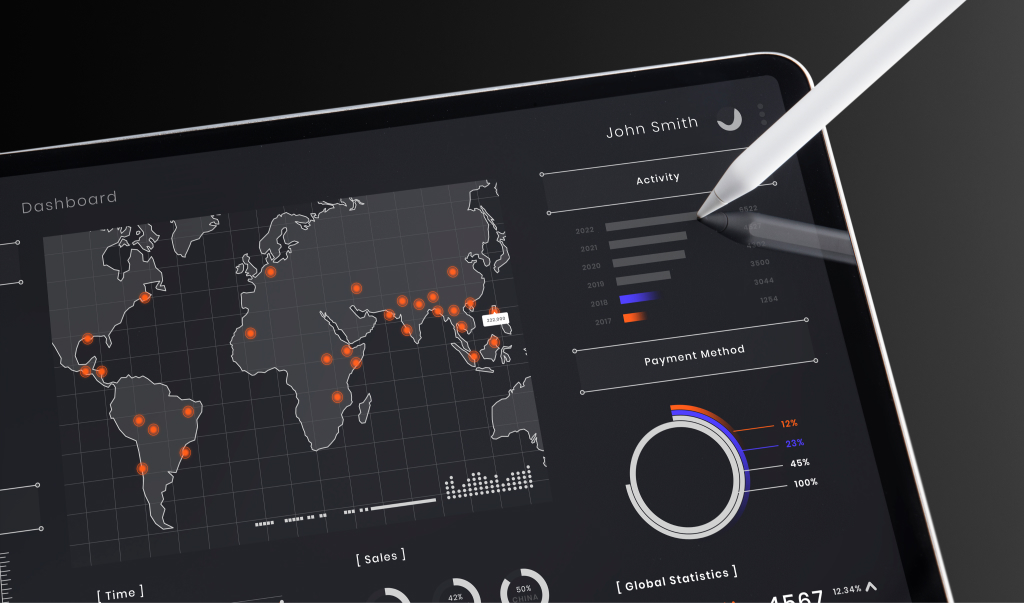
If the output is a dashboard, expect clear visualisations and a short guide on using it. For help on visuals, freelancers often combine analytics work with data visualisation for business best practice to make insights actionable.
How to post or bid on a Swaplance project for data work (simple project template)
Copy this brief into a Swaplance job post and adjust the details. Clear briefs attract accurate proposals and cut time-to-hire.
- One-sentence business goal: e.g. "Reduce monthly churn by identifying high-risk customers and proposing three retention actions."
- Two lines about your data: e.g. "We have customer records in a PostgreSQL database and three months of transaction CSVs. No direct PII is included."
- Specific deliverables: "1 dashboard in Looker/Tableau/Power BI, cleaned CSV with segment labels, short write-up with three action recommendations."
- Preferred timeline: "4 weeks — include milestones for data access, draft dashboard, and final handover."
- Acceptance criteria: "Dashboard shows churn rate by segment; cleaned CSV matches agreed schema; 30‑minute handover call completed."
Freelancer response tip: lead with a one-paragraph approach, one similar portfolio example, and a realistic timeline. Offer a small paid discovery phase if data access or quality is uncertain — it protects both sides and prevents scope creep.
Swaplance helps match you to freelancers who specialise in short, measurable data projects — use clear deliverables and acceptance criteria to get faster, more accurate proposals.
Quick closing checklist
- Define the business decision you want the data to support.
- List available data and how you’ll grant access.
- Specify deliverables, timeline and acceptance criteria in the brief.
- Consider a short paid discovery if data quality or access is unclear.
Done well, a small data project — whether by a freelancer or an internal hire — turns information into one clear decision. Keep scope tight, measure the outcome, and plan the next step based on the result.
Common questions
-
What’s the simple difference between data science and big data analytics?Data science focuses on building models and predictive tools to automate or forecast decisions; big data analytics focuses on collecting and analysing very large or fast datasets so those models and reports can run at scale. The two overlap often — many projects use both to move from insight to action.
-
When should my small business hire a freelance data expert instead of building an in-house team?Choose a freelancer for one-off analyses, dashboards, prototypes or short predictive tasks with a clear question and measurable outcome. Build an in-house team when you need continuous data pipelines, daily maintenance, model retraining or tight regulatory control over data systems.
-
What basic information should I include in a job brief to get useful proposals from freelancers?Include a one-sentence business goal, a short description of the data you have (files or connectors), exact deliverables, preferred timeline and clear acceptance criteria. Adding a sample dataset or offering a small paid discovery phase speeds up accurate responses.
-
What deliverables should I expect from a short (2–6 week) data analytics project?Expect tangible, decision-focused outputs such as a dashboard, cleaned dataset or a short model prototype plus a brief write-up of recommended next steps. Also ask for handover items: code or queries used, a short walkthrough, and clear acceptance criteria.